Key Takeaways
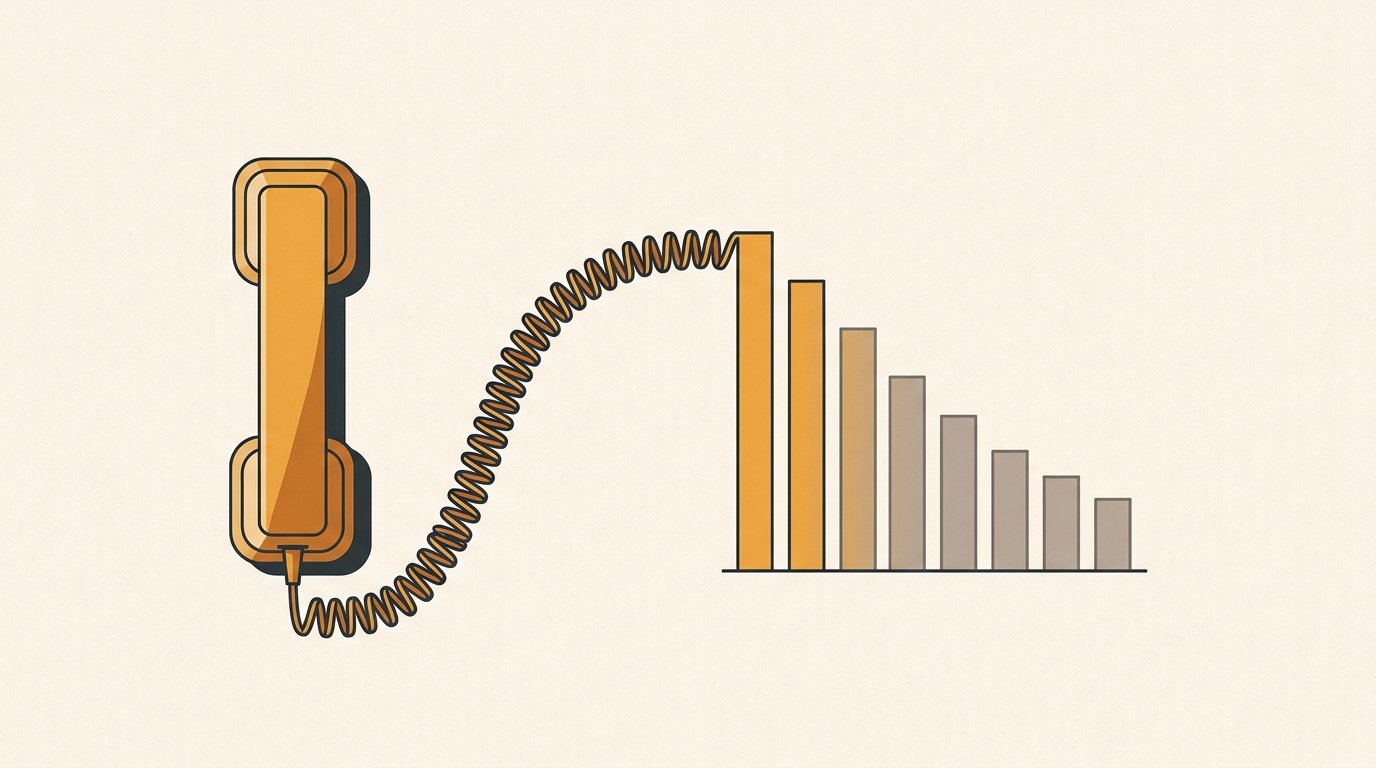
- At average performance a dialing program books about 3 meetings a month per rep and costs roughly $3,400 per booked meeting. Top-quartile callers book about 26 on the same payroll, at roughly $380 each.
- The nine-fold gap between average and top-quartile callers is wider than the gap between calling and any other outbound channel, so execution quality decides the economics more than the channel does.
- Dialing lifts cold email reply rates from 1.81 percent to 3.44 percent even when nobody picks up, which can make the dial worth more as a multiplier on email than as a standalone meeting source.
- The FCC one-to-one consent rule that took effect in January 2025 governs autodialed and prerecorded calls, not live human dials, but the ten-business-day revocation requirement applies to everyone and turns suppression into a real operating cost.
- A dialing program can outrun the number of conversations your closers can actually hold, and a booked meeting nobody runs is worse than a call never made.
The number the ranking pages leave out
Search for cold calling and you get two kinds of page. One argues about whether the channel is dead. The other hands you technique: research the account first, do not open with a pitch, dial between ten and eleven in the morning. Both assume you have already decided to pick up the phone and only want to do it better.
That is the wrong place to start if you run a business rather than a sales floor. Cold calling works. It has always worked, for somebody. The question worth answering is what a conversation costs you, what a booked meeting costs you, and whether those figures clear the value of a customer at your price. Almost nobody publishes that arithmetic. So here it is, built from the two most rigorous datasets available on the channel, with the vendor incentives flagged where they exist.
What a dial costs before anyone answers
Start with the person doing the dialing. The Bridge Group's 2025 SDR Models, Motions and Metrics report surveyed 351 B2B companies with a median revenue of $47M and a median deal size of $50K. It is the tenth edition of a study running since 2007, and the methodology is disclosed, which is more than most numbers in this category can claim.
Median on-target earnings for a sales development rep came in at $80,000, split roughly 68 percent base and 32 percent variable. That is the salary line. It is not the cost.
Add employer payroll tax at about 7.65 percent, health and retirement contributions that typically run 20 to 25 percent of base, and a tooling stack of CRM, sequencer, dialer and contact data that lands somewhere between $5,000 and $12,000 per rep per year. The Bridge Group also reports one manager per 6.4 reps, and that manager has to be paid out of the same program. A fully loaded rep costs $110,000 to $130,000 a year. Call it $10,000 a month, which is deliberately at the low end.
Now the output. Bridge Group found phone-centric teams averaging 56 dials a day. Across 21 working days that is about 1,176 dials a month, which is my arithmetic on their figure rather than a number they publish.
The nine-fold spread on identical payroll
Dials are not conversations. Gong's analysis of more than 300 million recorded cold calls, published in July 2024, puts the average connect rate at 5.4 percent and the top-quartile rate at 13.3 percent. Of the conversations that happen, 4.6 percent turn into a booked meeting on average, against 16.7 percent for the top quartile.
Worth flagging: Gong sells conversation intelligence software, and its dataset comes from companies that bought it, which skews toward organizations with real sales development functions. Treat 5.4 percent as a decent average rather than a floor.
Run 1,176 dials through the average column and you get about 63 conversations and just under 3 booked meetings. Run the same 1,176 dials through the top-quartile column and you get roughly 156 conversations and 26 booked meetings.
Same seat. Same salary. Same $10,000 a month.
- Average performance: about $3,400 per booked meeting
- Top quartile: about $380 per booked meeting
A nine-fold difference in unit cost, decided entirely by who is holding the phone and how well the list was built. That spread is wider than the gap between calling and any other outbound channel, which means the argument about whether cold calling works is mostly a category error. It works at wildly different prices depending on execution, and the average is not good.
The Bridge Group data makes the average harder to dismiss. Only 60 percent of reps hit quota, the lowest figure in the study's history. Average tenure is 1.9 years and median annual attrition is 40 percent, against a three-month ramp. A rep who leaves at 18 months spent one sixth of their tenure not yet productive, and you pay for the ramp again with the replacement.
The deal size where dialing stops paying
A cost per meeting is not a verdict. Carry it through to a closed customer.
Take the average column at roughly $3,400 per booked meeting. Assume a generous 85 percent of those meetings are actually held, and that one in five held meetings becomes a customer. Cost per closed deal is $3,400 divided by 0.17, which is about $20,000.
Twenty thousand dollars of dialing per customer is fine against the $50,000 median deal size in the Bridge Group sample. It is ruinous at a $12,000 annual contract. Same channel, same execution, opposite conclusion, and the deciding variable is a number about your business rather than anything about the phone.
Run the top quartile through the same filter and cost per closed deal falls to roughly $2,300. That version works almost anywhere.
Which gives a usable decision rule. If your annual customer value sits above roughly $40,000, dialing can pay even at unremarkable execution, and you have room to learn on the job. Below that, dialing only pays if you can reliably operate in the top quartile, which means excellent mobile-number data, a narrow list, and someone who has done this before. If you cannot honestly claim those, the money buys more pipeline somewhere else. We work through the same test for other channels in the signal-first outbound breakdown, where the cost of a wrong list shows up faster than the cost of a wrong script.
The dial may be worth more as a multiplier than as a meeting source
The most useful finding in the Gong data is not about calls at all. Prospects who received a call replied to email at 3.44 percent, against 1.81 percent for those who did not. That lift held even when the call never connected.
Nearly double the email reply rate, from dials that produced no conversation.
That reframes what you are buying. A dial that goes to voicemail is not a wasted touch, it is a paid improvement to the reply rate of a much cheaper channel. And the cheaper channel is doing real work: Cognism's State of Outbound 2026 reports its own cold email reply rate at 8.98 percent against a cited industry average near 5 percent, while calls made up 57 percent of all outbound tasks its team logged. Those are Cognism's internal figures on its own optimized team, published by a company selling contact data, so read them as what good looks like rather than what typical looks like.
Put the two together and a defensible structure appears for a company that cannot afford a full dialing operation. Lead with email against a tightly selected list, add dials on the accounts that matter most, and count the dial as list-warming rather than as a meeting channel with its own quota. You get most of the reply-rate lift for a fraction of the headcount. The infrastructure side of that setup, and the reason sending reputation decides whether any of it lands, is covered in cold email infrastructure.
This is also why the persistence advice circulating on the technique pages is close to backwards. Cognism's 2025 cold calling report found 93 percent of conversations happen by the third attempt and more than 98 percent by the fifth, with an average call lasting 93 seconds. Attempts six through twelve are not persistence. They are cost with the upside already spent.
What the law actually restricts
Most pages covering the legal side of this get it wrong in a way that matters commercially.
The FCC adopted a one-to-one consent rule that took effect on 27 January 2025, closing the lead-generator loophole so a single consent can no longer authorize calls from a list of sellers. Plenty of commentary treated this as a restriction on cold calling generally. The FCC's own guidance on the rule says otherwise: it governs autodialed and prerecorded-voice calls, and has no bearing on live calls placed by a person without an autodialer.
So if you dial B2B prospects yourself, one at a time, that rule is not the thing constraining you. What does apply, to everyone, is the requirement to honor a do-not-call or revocation request within ten business days. That sounds administrative until you run more than one campaign. A request to stop has to propagate across every list and every channel you own, rather than only the campaign it arrived in, which means a suppression file that your sourcing process checks before enrichment rather than after. We treat that as infrastructure, not paperwork, and the signal-based outreach checklist includes the screening step most programs skip.
Autodialers and prerecorded voice are a different legal posture with real exposure. If a vendor pitches you an AI calling agent, the consent question becomes the first thing to resolve rather than a detail for later.
The ceiling nobody prices
Here is the failure I see most often, and it has nothing to do with connect rates.
A dialing program that works produces conversations faster than a small company can hold them. Bridge Group puts the median monthly quota at 10 held meetings per rep and the rep-to-closer ratio at roughly one to two and a half. A top-quartile caller on 1,176 dials a month generates 26 booked meetings. One person closing deals absorbs somewhere between 10 and 20 discovery conversations a week alongside proposals, delivery and everything else. Two effective callers can bury a single closer inside a month.
What happens next is predictable. Meetings get scheduled three weeks out and go cold. Nobody confirms the day before and half the calendar no-shows. The conversations that do happen get no follow-up because the person who ran them is behind. You paid $380 a meeting, which was the good outcome, and then threw the meeting away.
A booked meeting nobody runs properly is worse than a call never made, because you spent the money and burned the account. This is the whole reason we treat follow-up as its own engine rather than an afterthought on the end of outbound. Reminder logic, no-show reduction, lead routing and the confirmation step the day before are where booked conversations turn into held ones, and that machinery is described in CRM automation and lead routing software.
Cognism reports that nearly nine in ten of its outbound meetings go ahead. That figure comes with no published denominator and describes a team that has industrialized confirmation and routing. Do not assume it transfers to a program where the calendar invite is the last automated step.
The honest constraint on outbound volume is rarely list supply or dialing capacity. It is how many conversations the business can absorb without dropping them. Set the volume from that number and work backwards.
How to decide
Cold calling is neither dead nor solved. The channel is expensive and carries an unusually wide performance band, and what decides your outcome is your customer value, the accuracy of your phone data, the seniority of the person you need to reach, and whether anyone has room in their week to hold the conversations.
Three questions settle it. What is a customer worth to you in year one? Can you get accurate mobile numbers for the people you actually need to reach? And who runs the conversations once they start landing?
If the answers are a high number, yes, and a named person with room in their week, the phone will pay. If the answers are a modest number, probably not, and nobody in particular, then the dial is still useful as a way to lift the reply rate on a cheaper channel, and the money is better spent making that channel accurate. Either way the sequence matters more than the channel choice: get the targeting right, get the follow-up built, then decide how much of the outreach happens by voice. That ordering is how we build and run the Outreach Engine, and how it connects to the rest of the growth system rather than running as a channel on its own.
Joseph Perkins
Joseph Perkins is the founder of Perkins Growth Systems. He spent 7 years leading marketing for a 4x Inc. 5000 firm from startup to exit, and now engineers search visibility, signal-based outbound, and RevOps and CRM automation systems for B2B companies.